Dr. Bappaditya Mukherjee
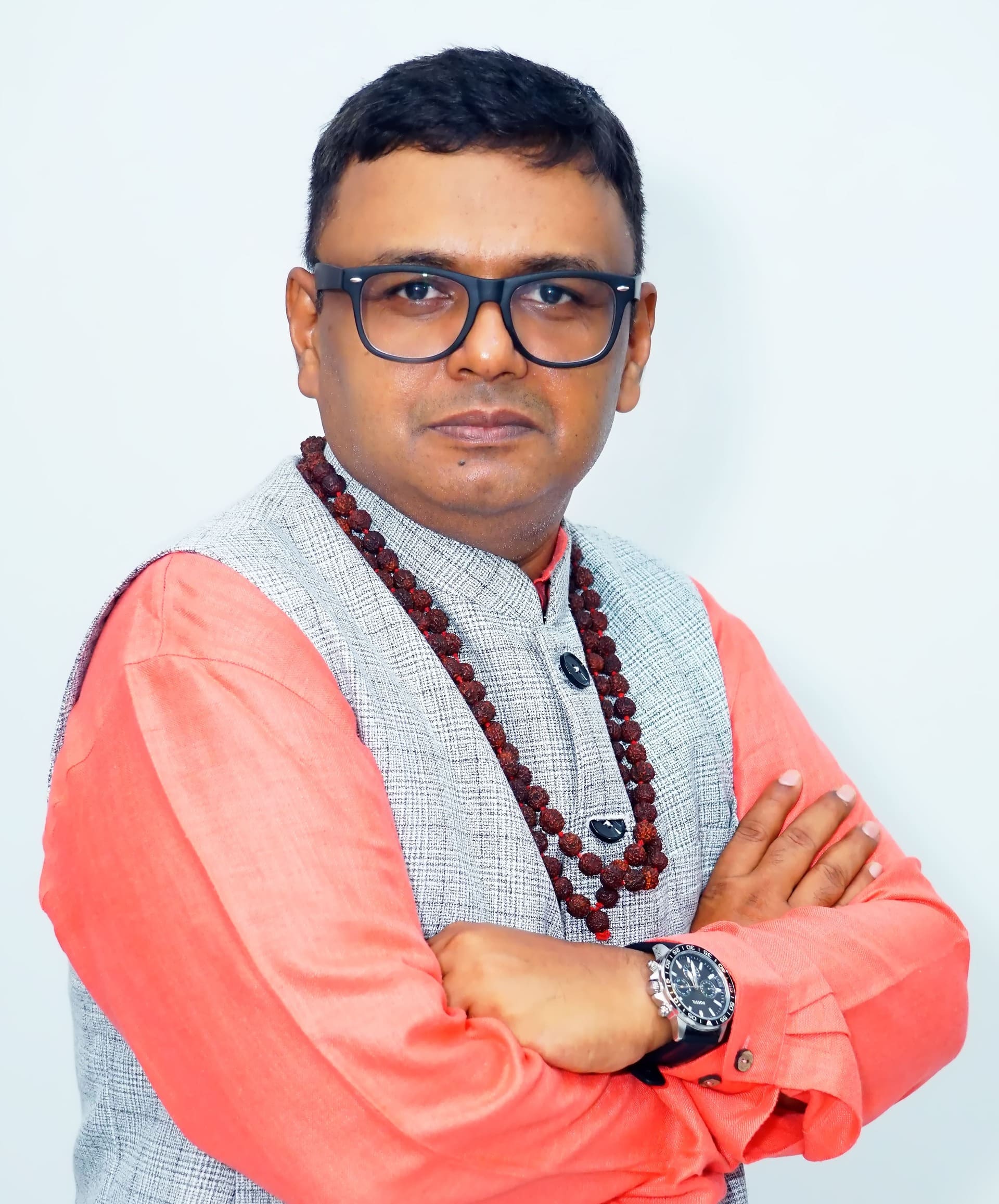
Dr. Bappaditya Mukherjee (Bappa): US-trained scholar in law, global affairs & English; passionate naturopathy-Ayurveda advocate.
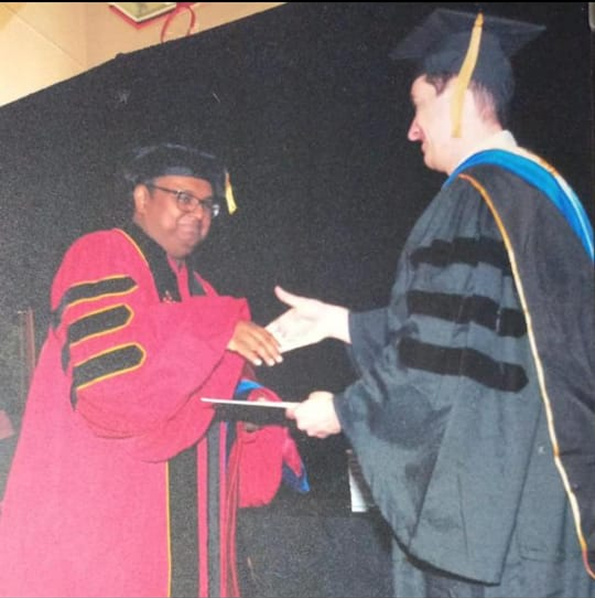
About
Welcome to the official website of Dr. Bappaditya Mukherjee, PhD (International Relations, University of Maryland, USA).Former faculty at State University of New York, I now teach Law, English & Social Sciences at Little Angel Institute of Law (LAIL), Mhow, Madhya Pradesh. I was born into privilege: my father was a senior Indian Administrative Service officer and my mother was a Hindustani classical vocalist and scholar of mathematics & history, I grew up where discipline met rāga and learning was sacred. Seventeen years in America broadened my mind; caring for my father after my mother’s passing in 2015 reshaped my heart. Today, this wandering scholar lives with devotion to God, pursuit of knowledge, and care for the less fortunate.
Motivation
It was serendipity that brought about my forthcoming essay to commemorate the first death anniversary of my father on January 28, 2024. My father had been suffering from various ailments for several years prior to his demise. I thought I had ample opportunity to emotionally prepare myself for his inevitable passing. I was wrong.
For almost nine months following Baba’s death in late January 2023, I remained holed up in my apartment in suburban Indore. I did virtually nothing except watch a variety of content on OTT platforms on my mobile and cricket matches on TV. I didn’t read or write a single word. The only human contact I had was with Savan Vansh, my all-purpose handyman and driver, and Varsha, whom Savan had roped in as a maid. Varsha was very bad at her job. She would try to cover up her inefficiency by wishing me a robust “Good Morning, Sir” every day.
When confronted with the shoddy quality of her work, she volunteered that cooking and cleaning are not her primary occupations.She used to work in a needle factory but became unemployed, like so many others, during the lockdown. Her lack of experience with household management clearly showed in the lack of upkeep in my apartment.
Varsha’s awful cooking gave me a pretext to order most of my meals from restaurants in the neighborhood. All I had to do was message Savan, and he would deliver. After almost twenty years, I resumed drinking beer and white wine. Thankfully, at the age of 50, my capacity to consume alcohol had significantly declined compared to my late twenties. Following a few enthusiastic solo drinking sessions to accompany the major matches of the Cricket World Cup, I ceased. Inevitably, all this consumption of unhealthy food and drink caused me to gain weight. I also started to feel rather morose.
From Diyas to Distance
How a holiday night turned into a journey toward myself
On Diwali eve, the excited shrieks of kids enjoying the festival season were the dominant sound in my apartment complex. A number of these kids rang my doorbell and warmly wished me Happy Diwali in unison. Then they demanded sweets from me, just like American kids do on Halloween. I asked them to return a couple of hours later. I sent Savan to Bhanvrilal Sweets in nearby Mhow and ordered 5 kg of their famous rabdi, the favorite sweet of my late father and me. Later that evening, a grand old time was had by these kids in my apartment, in which I had been living like a recluse. This brief exchange with these cute kids triggered a wave of emotions in me. I thank those kids for teaching me a valuable lesson: I needed to let go of the pain associated with the dead and explore happiness among the living.
On the spur of a moment, I decided to surprise my uncles son, Shantanu, in Pune. I looked up the nearby coastal areas of Maharashtra as potential spots to visit with my cousin and his wife.
I booked a flight and messaged Shantanu about my impending visit. To my disappointment, he told me he was out of station visiting his parents in Merrut. Since I had already purchased the ticket,I decided to take a solo trip from Pune to Daboli and Diveagar.
I hired a cab with a good Bluetooth system. I was armed with four playlists titled “Travel English,” “Travel Hindi,” “Travel Bengali,” “Travel Latin,” and “Travel Gazals” on my phone. These contain songs downloaded from Amazon Music, making them impervious to the variability in internet connectivity.
Once I left Pune city limits, I was immersed in the stunning beauty of the Western Ghats. For the next five days, I stayed in various places in this region with low internet penetration.
This proved to be a blessing in disguise. I didn’t realize it then, but I had unintentionally enrolled in a digital detoxification program. With non-refundable hotel bookings in advance, I had no choice but to spend five days without access to OTT platforms and YouTube reels to keep me distracted. Sitting in the elegant restaurants of these hotels, with nothing to do but stare at the beautiful environs, I began writing random observations about the upwardly mobile Indians patronizing these businesses.
Learning to Speak India Again
One thing that characterizes Indians more than any other members of a national political community is the ease with which they can start conversations with each other in random places. Having lived in the US for 16 years, I had become accustomed to public places in which strangers do not break the ice that easily with each other. In India, a request by one to pass the salt or the sauce from a neighboring table can very easily generate a volley of questions being fired at you: one question more intrusive than the next. Predictably, I was confronted with these questions as well. The order of such questions would go something like this:
1. Where are you from?
2. What do you do?
3. Where is everyone else that is traveling with you? (Traveling solo for leisure is still rather uncommon in India)
4. Are you married? If the answer is yes, then the next question will be
5. Where is your wife?
If the answer to question number 4 is no, then you will be asked,
6. Why are you not married? Were you ever married?
If you were to answer, to the second and third parts of question 6 as “Yes, I was married but later divorced, and no, I don’t have any kids”, then all bets are off.
Offers to set up your profile at marriage websites like www.bharatmatrimony.com or www.shaadi.com are likely to be followed.
In any case, you get the picture.
In my replies to these interrogative sessions at these hotels in coastal Maharashtra, I began noticing a pattern. I was talking a lot about my relationship with my father and what it was like growing up as the only child of an IAS officer in Uttar Pradesh. The nuggets of information narrated by me in these interactions were utterly fascinating for the random strangers I was encountering during this trip. In the evenings, when I retired to my room, I recapitulated all that I had narrated and recorded on my mobile.
The Meghan McCain Moment
This brings me to someone called Meghan McCain. If you do not know who she is, you have not missed anything. Nonetheless, let me introduce her to you. Meghan McCain is a dim-witted nitwit who can be charitably described as a US political commentator. She is sufficiently credentialed, having acquired an undergraduate degree from the prestigious Columbia University. However, her primary claim to fame and access to US public discourse comes from the fact that she is the daughter of the US Senator, Vietnam war veteran, and US presidential candidate, the late John McCain. She is routinely mocked by her ideological rivals as well as her political allies for incessantly talking about her father. The video sharing channel YouTube is full of videos of her doing this tiresome routine, most infamously during her stint on the popular US daytime talk show The View.
As you would have guessed by now, I am not a big fan of Ms. McCain. However, I am self-aware enough to be wary of the possible parallels between Ms. McCain’s daddy issues and my voluble narrations about my father to all these strangers in coastal Maharashtra. Ms. McCain’s crass misuse of her father’s name and connections should be viewed as a cautionary tale for other children of privilege like me. While it is critical that people like me and Ms. McCain honor their father’s legacy, we must also maintain our own dignity while doing so.
The Black Notebooks
In the weeks that followed, I travelled to the Andaman and Nicobar Islands and to Bengaluru. The above pattern of conversations focused on my father’s life kept recurring in various touristy places I visited.My black notebooks gradually filled up with all the stories and observations about my life with my father. The forthcoming essay to be shared on January 28th is drawn from the contents of these notebooks.
School Years at Thriveni Academy (1990–1992) & St. Francis’ College (1984–1990)
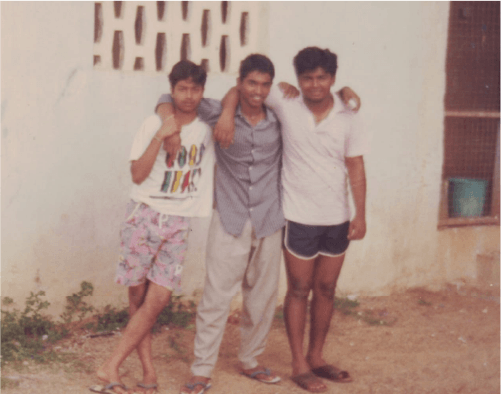
The comfort one finds in interlocked arms of one’s mates can compensate for the most desultory of circumstances !Thriveni Academy. March 1992. This was taken during the board exams.
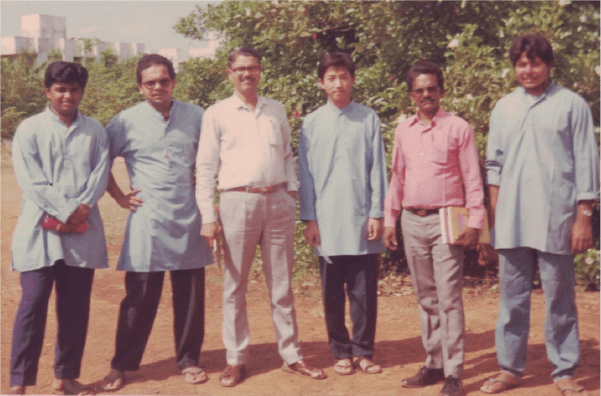
The two “good” boys of the combined Arts & Commerce section, Diju and I with the two “Dadas” of our dormitory! Our Geography and Commerce teachers right there with us to save the good from evil! – Post-Board Exam March 1992
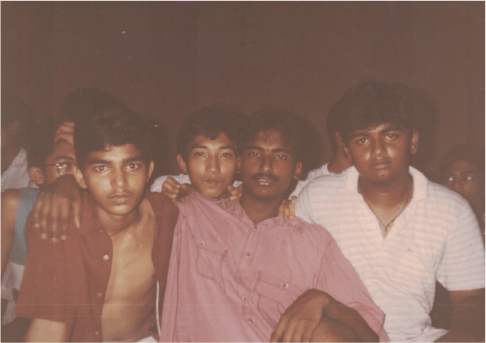
Boyish camaraderie at full display. 1990-91 in 11th standard. From left, Sanju from Bokaro, Diju from Imphal, Rajib Saha from Kolkata and me representing the peaceful and docile city in Eastern UP called Gorakhpur!
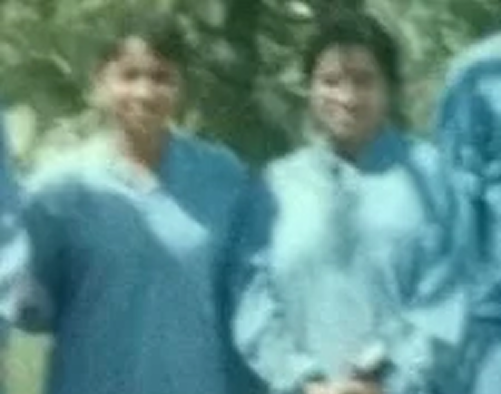
Sanjukta Chatterjee and Ianosha Majaw. The two girls in my class for whom I expressed an interest. However, my proposals were firmly turned down by both these lovely young ladies!!!
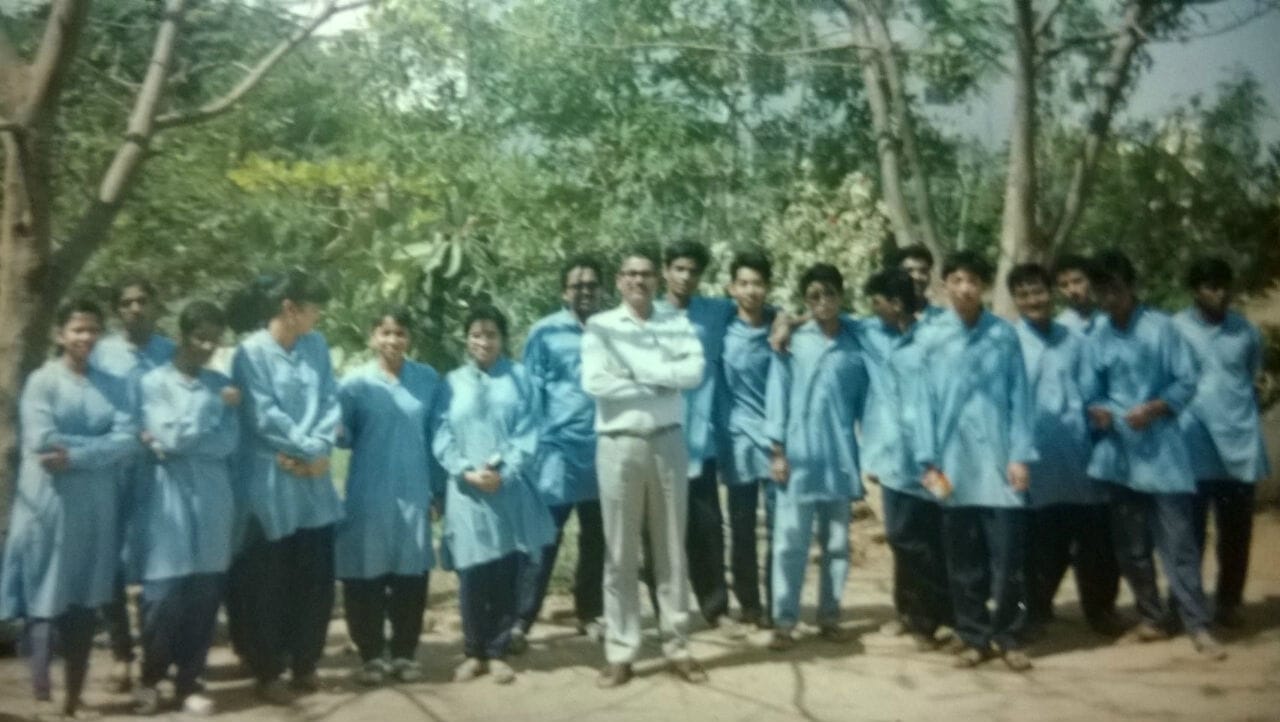
The arts/humanities group at the beach just prior to the 12th board exams. I am on the extreme right looking forlornly in the distance.
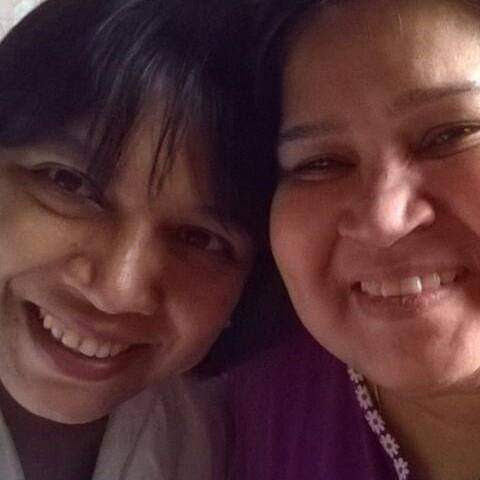
Ianosha and Sanjukta…years later. Perhaps discussing how they dodged a bullet called Bappaditya Mukherjee!
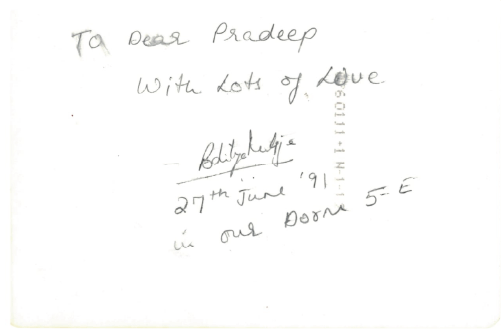
The parting note to my friend, the competent and intelligent Pradeep Rathi. This was right before we left for home for the summer vacations after finishing 11th standard.
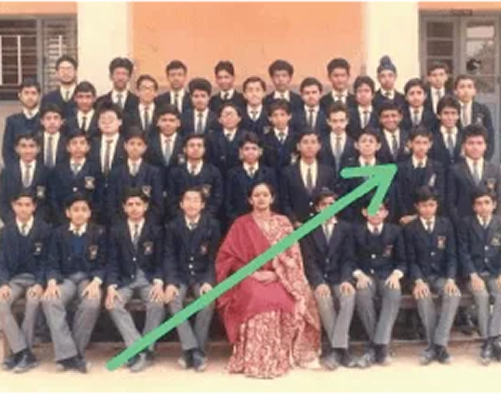
1988-89 Class 9 D St. Francis’ College Lucknow. Mrs. Nishi Pandey Class Teacher (English)
My Academic Journey at Hindu College (1992–1995)
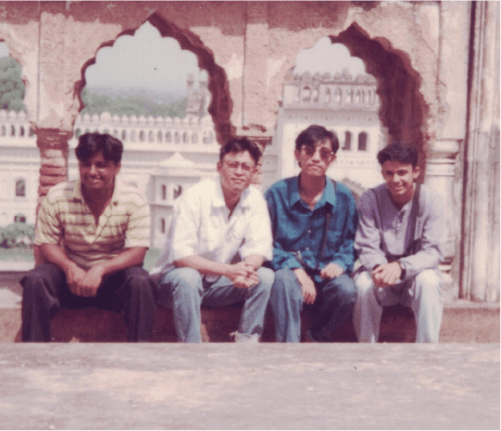
October 1993 -Me, Math tutor, Diju and Rajiv Pramanik at Bada Imambada, Lucknow
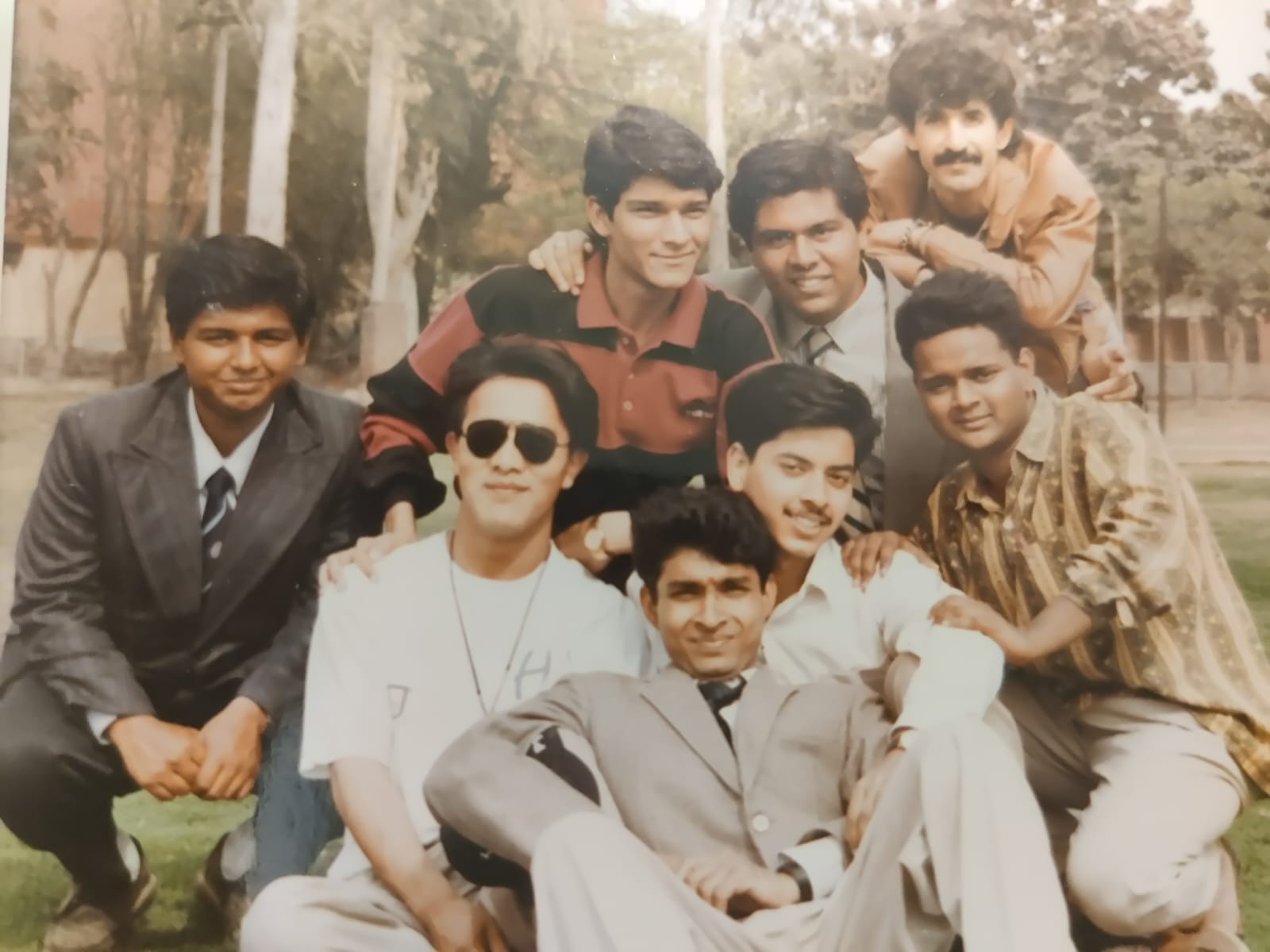
Hindu College, Founders Day, February 15, 1993. I am on the extreme left.
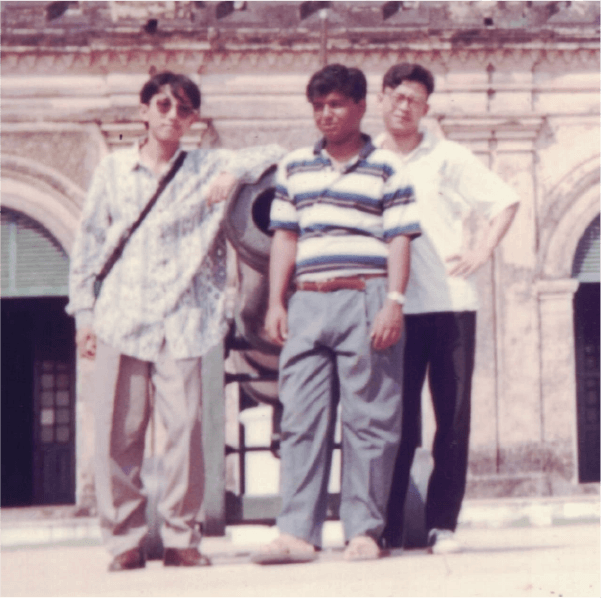
We were preparing for CAT exams for 1994 December
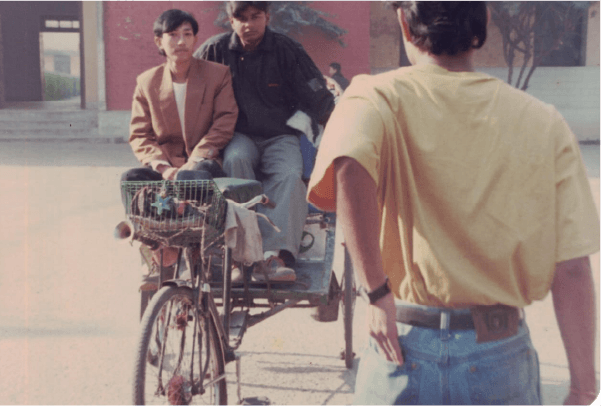
In front of Hindu College Hostel November 1993. Diju and I
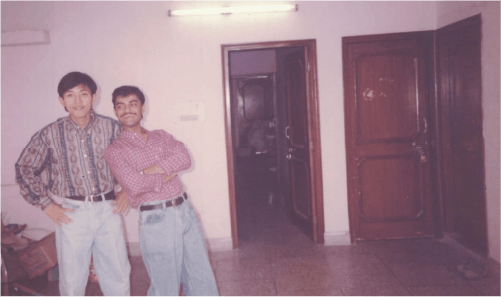
The always smartly dressed Diju with the efficient Pradeep. November 1993. Diju’s apartment in Mukherjee Nagar, Delhi.
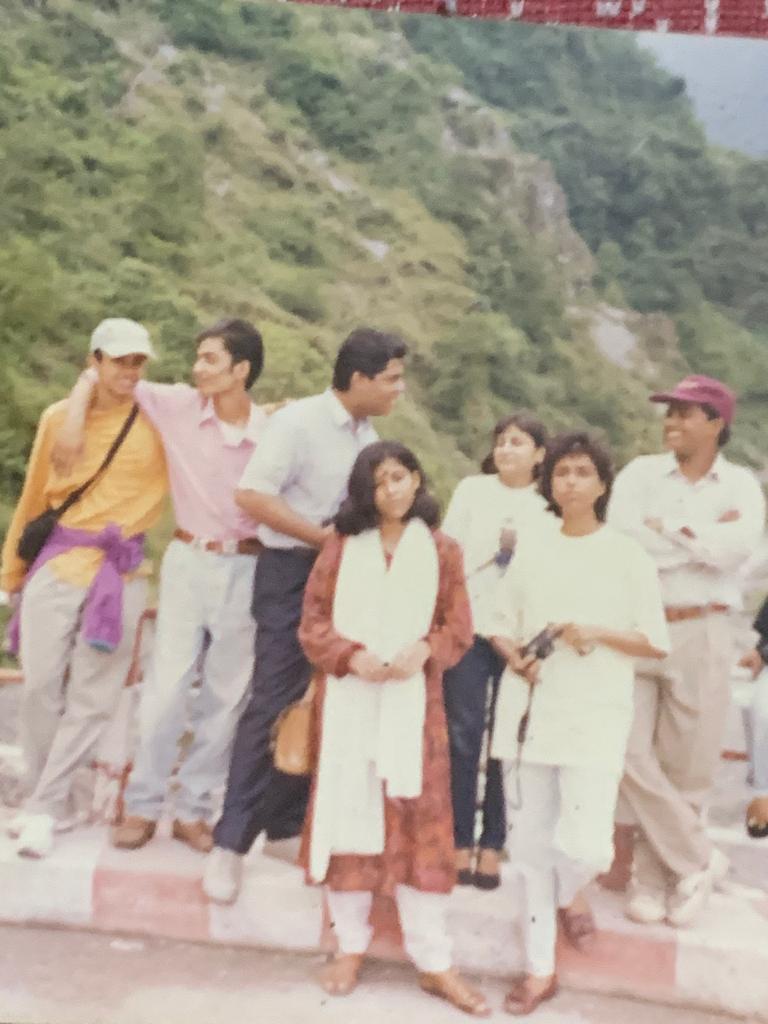
September 1992. Hindu College leisure trip to Dehradun & Mussoorie. I am the one with the purple cap.
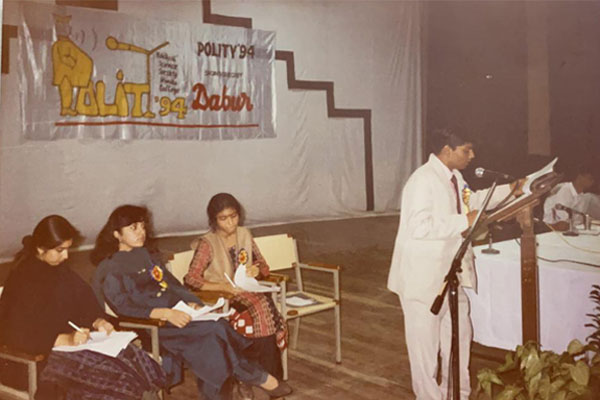
Niharika, Rupali, Nonika and I representing Hindu College September 1994 at Hindu College Auditorium.
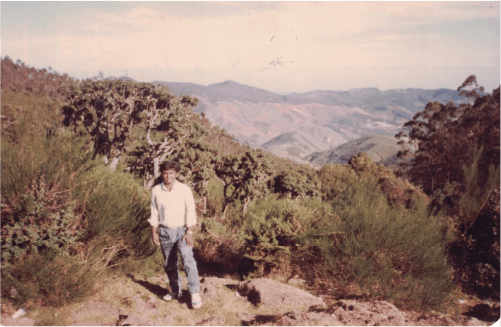
June 1993. Somewhere in the mountains of Uttarakhand. Summer trip with my parents. It was on this trip that I had a serious quarrel with my Baba. Baba’s parting shot in that duel between father and son rings in my ears to this day!
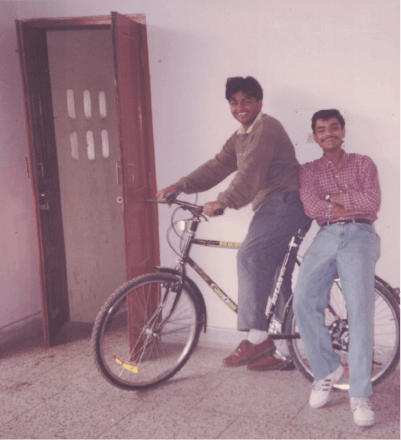
Pradeep and I enjoying our youth together at Diju’s apartment in Mukherjee Nagar, Delhi. November 1993. Diju hosted Pradeep during the latter’s visit to Delhi from Mumbai. I was at Hindu hostel but moved in with Diju to keep Pradeep company. It was a marvellous hosting job by Diju and I.
The three musketeers travelled extensively across the length and breadth of Old and New Delhi with Pradeep paying the auto fare!!!
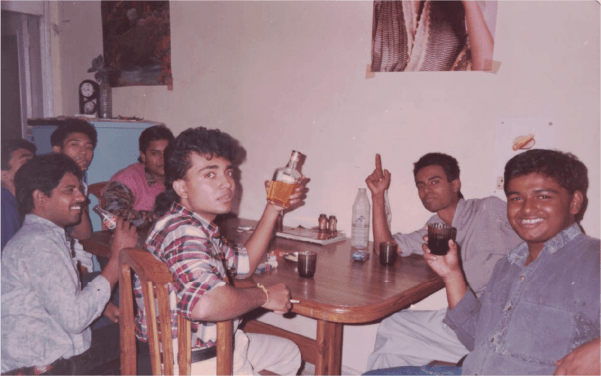
November 1992. Rohit Jhunjhunwala’s rented apartment in Lajpat Nagar, where I stayed for the first three months of my BA (Hons.) in Political Science. Probably the first time I am drinking alcohol. (With me and Rohit are most of the Thriveni boys who had joined various colleges in Delhi University after their 12th board results.)
Personal
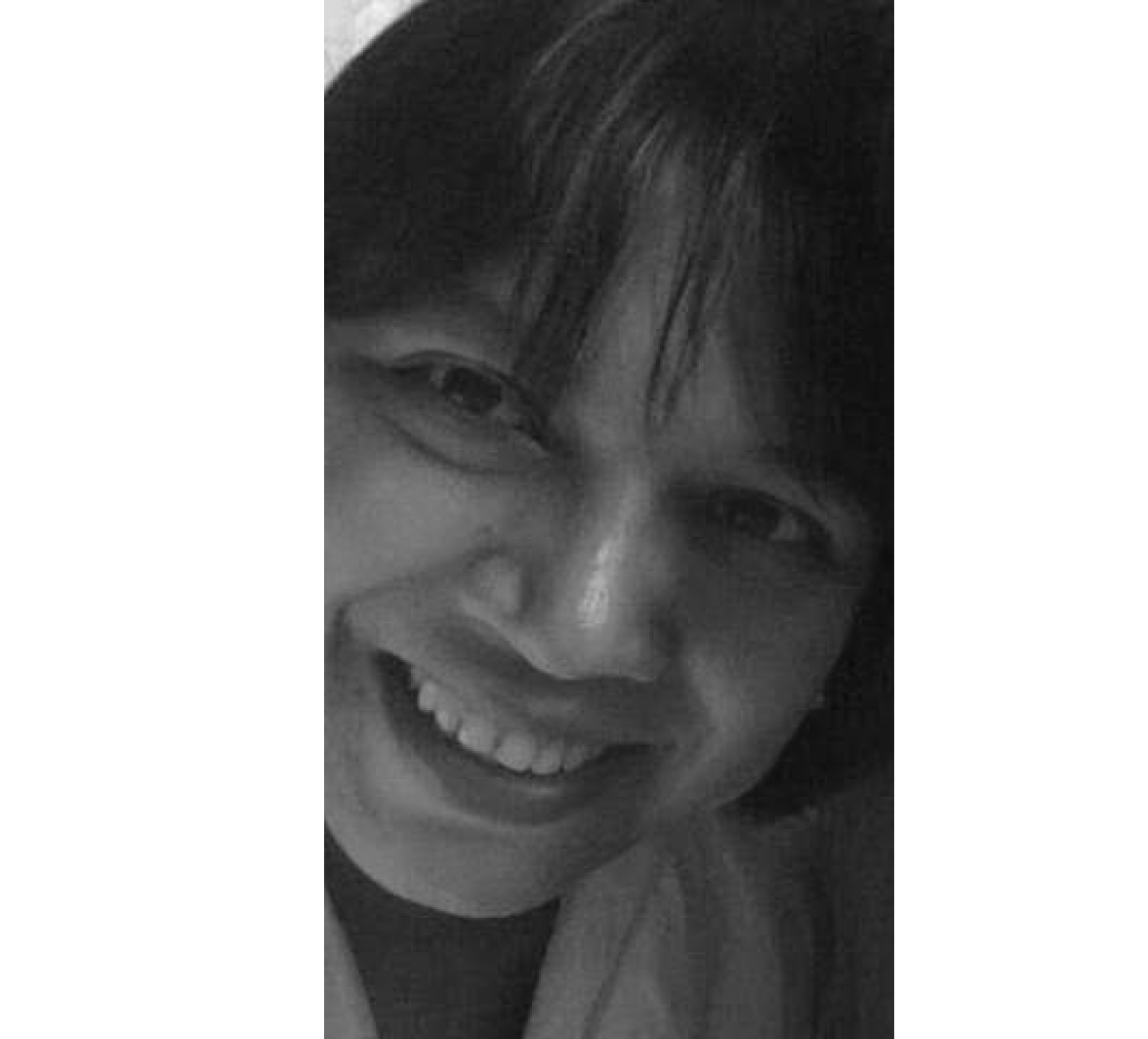
Ianosha and Shillong: 32 Years Later
My first encounter with Ms. Ianosha Majaw was in the reception area of the Thriveni
Academy in June 1991. In the summer of 1991, I found myself among a motley crowd of
fresh incoming students of a new coeducational boarding school near Chennai. Among those who were completing the formalities of the admission process with me was a diminutive girl with a husky voice, speaking English in a highly sophisticated manner.
For the next two years, Ianosha and I were classmates in section F of the 11th and
12th standard at Thriveni Academy. I was a backbencher who loved to participate in class
discussions, while Ianosha was relatively demure. However, this is not to imply that she
lacked interest in our curriculum. She was very diligent about her studies. She was always
checking out books from our school library for recreational as well as educational purposes. I noticed that whenever we had some spare time, she preferred to read rather than engage in frivolous conversation with me or her other classmates.
Out of the blue, she would turn to me and ask random questions. For example, once
she ‘asked me, “Bhappadityaa (that’s how she pronounced my name with an added ‘h’ and ‘a’ at the end), where is NASA located?”. Not wanting to appear like an ignoramus in front of the clearly precocious Ianosha, I nervously blurted out the name of the only obscure American City that came to my mind: Santa Monica, California. That was, of course, incorrect since NASA is located at the Cape Canaveral Space Force Station in Florida.
As a fellow student at Thriveni, Ianosha really caught my attention when she won a
school-wide essay competition in Class 11 at Thriveni Academy. Our brilliant teacher of
Political Science and Economics, Mr Ramakrishnan, was expecting me to win this competition. I had been performing very well in my studies from the time I joined Thriveni in 1991.
However, when I read Ianosha’s essay, I had to concede that the prize rightfully belonged to her. Ianosha’s grasp over the English language and vocabulary was clearly better than mine. I was thoroughly impressed by her depth of knowledge about the various facets of the topic of the competition. This essay competition was organised to reflect on the 200-year anniversary of the French Revolution of 1789.
Thereafter, I tried my best to get into Ianosha’s good books. This included asking my
father to share all the information about John F. Kennedy Jr. The reason I had suddenly
developed an interest in John F. Kennedy Jr. was because Ianosha had a habit of writing the following on the drawing board in between our classes: I Love JFK Jr.! My father used to provide long-distance mentorship via his handwritten letters and he would send newspaper and magazine clippings to read and comment on. He must have been nonplussed by my
strange request.
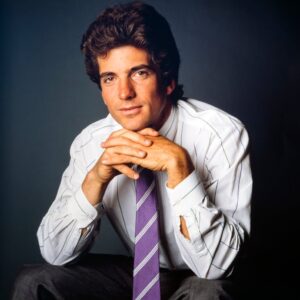
John Fitzgerald Kennedy jr. (Nov 25, 1960- july16- 1999) or simply known as JFK jr., was an American attorney, business man, Journalist, and magazine Publisher. He was the son of John F Kennedy, the 35th president of the united states and first Lady Jacqueline Kennedy.
Imagine my surprise when I got to know who Mr. JFK Jr. was and more importantly, what he looked like. It was clear that Ianosha had very high standards for her dream man. I had enough self-awareness to know that, compared to JFK Jr., I didn’t stand a chance. My teenage self was thankful that JFK Jr. was thousands of miles away from Ianosha in America while I was in much closer proximity to her.
I found out that she belonged to the Khasi tribe of Meghalaya. I was very lucky to have a father like mine with whom I was able to discuss most things. Baba was posted as the commissioner of Gorakhpur at that time. He would write long and frequent letters to me asking me to describe my hostel life, the books I was reading and my new friends. I recall
talking glowingly about Ianosha in my letters to my father. In the pre-Google days, my Baba was my source for random questions. Since I was a bit shy to ask Ianosha about Khasi culture, I chose to direct my queries to my erudite and knowledgeable father. He promptly responded by sending to me whatever information he could find about the Khasis and the
state of Meghalaya. My encounter with someone like Ianosha at the age of 18 opened my eyes to the privilege that came from being born into a middle class Bengali Brahmin family based in the Hindi heartland.
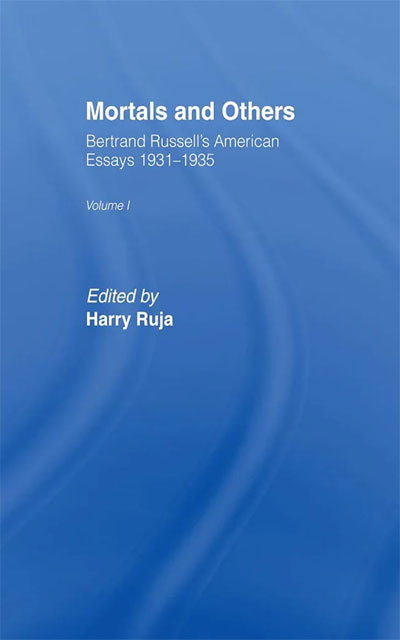
One memorable instance of me being too smart for my own good comes to mind. I requested Baba to write a letter to the Thriveni Academy authorities to excuse me from attending the Sunday bhajan session. Instead, I wanted to attend the Sunday mass organised for the Christian students. My father thought that I was going through a spiritual crisis. He promptly gave me a book that had Bertrand Russell’s famous essay, “Why I am not a Christian.” He told me that in the coming months he and I would discuss its contents via written correspondence.
The only problem was that my reasons for attending the Sunday mass with my Christian school mates had little to do with a spiritual crisis. It had more to do with a hormonal/psychological/biological crisis. I was completely smitten by a classmate from the north east, who happened to be Christian. In any case, the only outcome of my infatuation for Ianosha was that I thoroughly read the book by Bertrand Russell given by Baba and sent several of my thoughts on it to him via postal mail. Thanks to Baba’s letter, I was also spared the rather dissonant bhajans and found comfort in the relatively mellifluous hymns and carols at the Sunday mass, which I attended with full gusto for over a year.
This experience had a very deep, albeit temporary effect on my relationship with God. I became a champion of atheism and, in the farewell function, gave an impassioned speech in defence of atheism and attack against institutional religion. I have since become a nominal practitioner of Hinduism.
The two beautiful years in Ianosha’s and my life came to an end in March 1992. Ianosha and I appeared for our board exams under the watchful guidance of our excellent teachers. Our preparation for the boards was top notch and we were extremely confident of doing well. After the exams concluded, the Thriveni management decided to reward the entire 12th standard batch with a day trip to a nearby beach of coastal Tamil Nadu. At the end of that day, I approached Ianosha with my notebook and requested her to share her home address, personal details and other interests. In the pre-internet era, this was the only way young adults got to know each other better.
Apart from sharing her details and information about her varied interests and hobbies in her amazingly artistic handwriting, Ianosha wrote in my notebook: “See you in my beautiful hometown of Shillong during the holidays!” I don’t think Ianosha expected me to take her throwaway line seriously. However, my 19 old mind convinced itself that this was a personal invitation from Ianosha to me to come to Shillong.
Hence, it became my mission to convince my father to plan a family trip to Shillong. Following our 12th Board exams, when I reached Gorakhpur, I thought of a clever idea to put myShillong plan into action. I suggested to Baba that he should avail the benefit of leave travel concession (LTC) given to him by the Indian government to fund a family trip to Shillong.
Normally, my hard-headed Baba was quite averse to taking advice from me, especially, since he exclusively used his LTC facility for our annual December sojourn to Kolkata. Nonetheless, my father surprised me by agreeing to my suggestion for a Shillong trip.
I promptly wrote to Ianosha telling her that I would soon be landing in Shillong with my parents in tow. However, fate, or more accurately, the Government of Uttar Pradesh intervened to stymie my holiday travel project. My father was suddenly transferred back to Lucknow as the Chief Electoral Officer of UP to prepare for the state elections of 1993. This
completely ruined my plans and Ianosha and I were reduced to exchanging handwritten letters about our mundane post-Thriveni lives in Shillong and Gorakhpur respectively.
After a brief interlude of three years at two different colleges in Delhi University, Hindu and Lady Shriram, Ianosha and I were reunited in 1995 at Jawaharlal Nehru University (JNU) in New Delhi. in the MA International Relations batch of ’97. After that, our lives took divergent paths when I left India to pursue higher studies in academics in the United States. On 15th March, 2024 I arrived in Shillong for my first ever visit. One of the first to call was Ms. Iadashisha Majaw, the elder sister of Ianosha. I am eagerly waiting to meet Ianosha’s family.
It was a deep personal loss for me when Ianosha passed away on November 17, 2018 after a prolonged battle with cancer. I will forever cherish every moment that I spent with Ianosha in the Thriveni and JNU classrooms. The unique way she pronounced my name brings a smile to my face to this day. I count it as among my life’s biggest privileges that I crossed paths with such a beautiful woman who also had a brilliant mind. It is a pity that she met such a tragic and untimely end. I pray to God to bless her soul. May her soul rest in peace
My Relatives
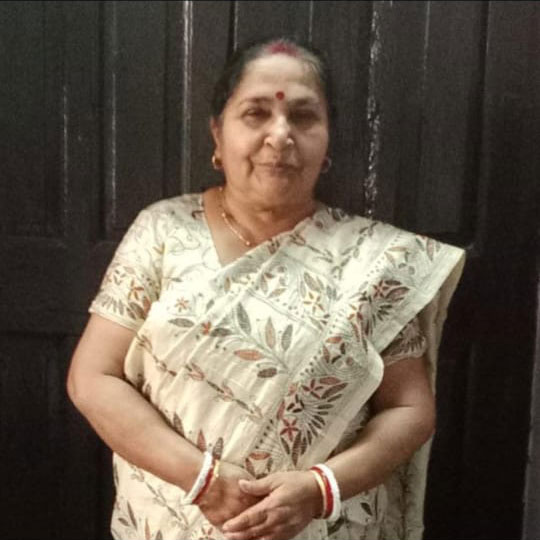
Smt Krishna Mukherjee
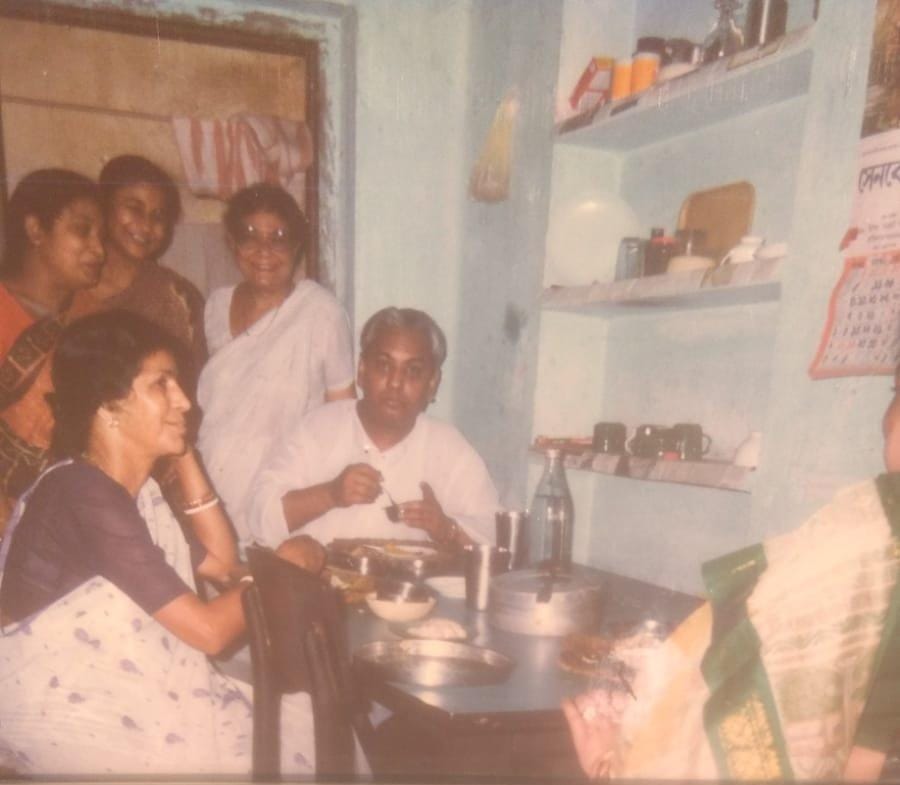
Baba and Ma being fed by our relatives in Shithi, Kolkata
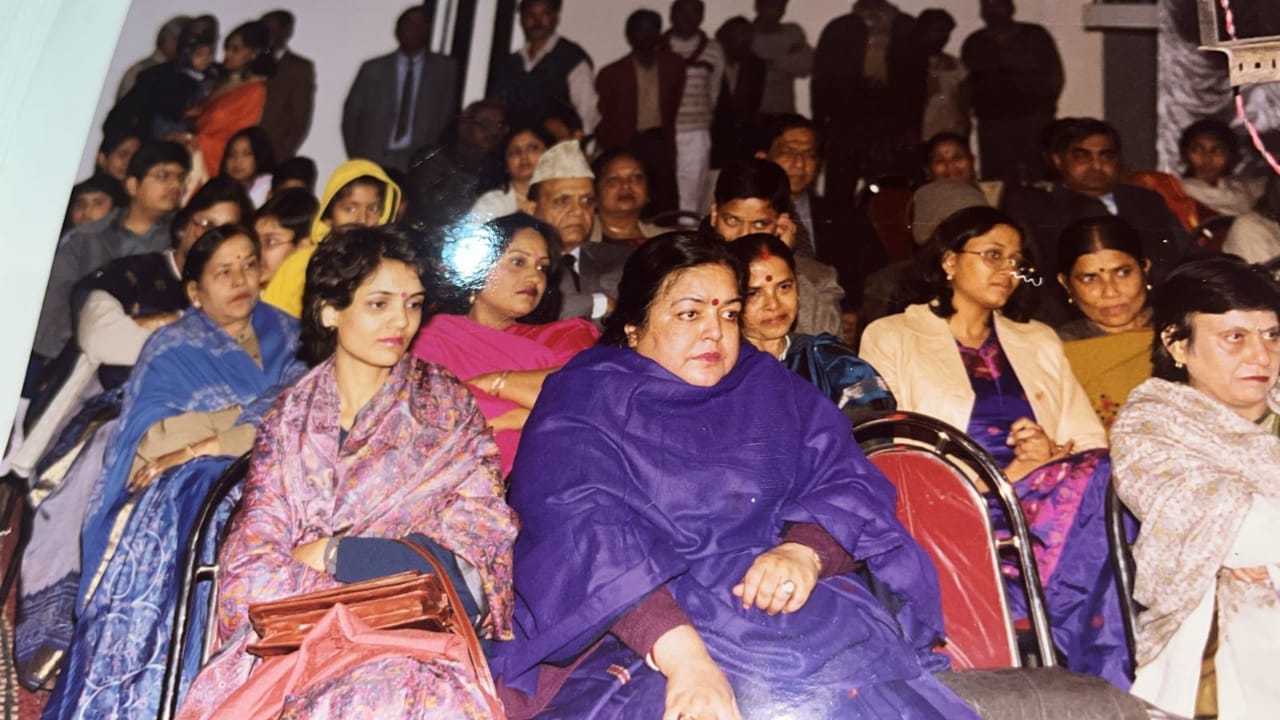
My mother, Mrs. Jayashree Mukherjee at a function.
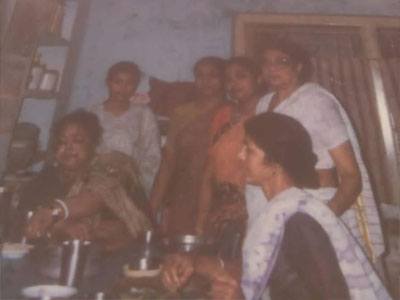
Baba and Ma being fed by our relatives in Shithi, Kolkata
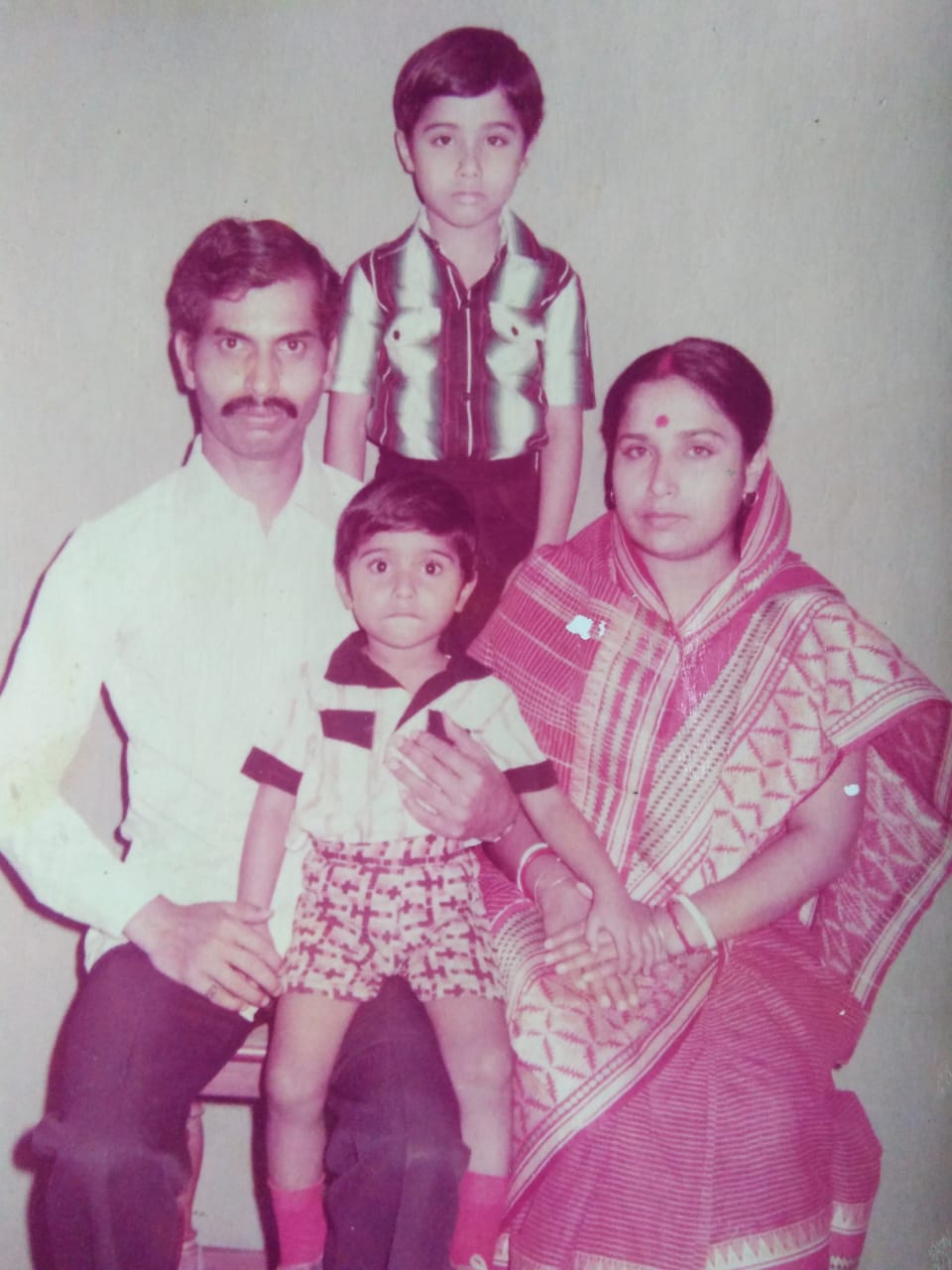
Sh Swapon Kumar Mukherjee,Smt Krishna Mukherjee, Shantanu Mukherjee,Atanu Mukherjee
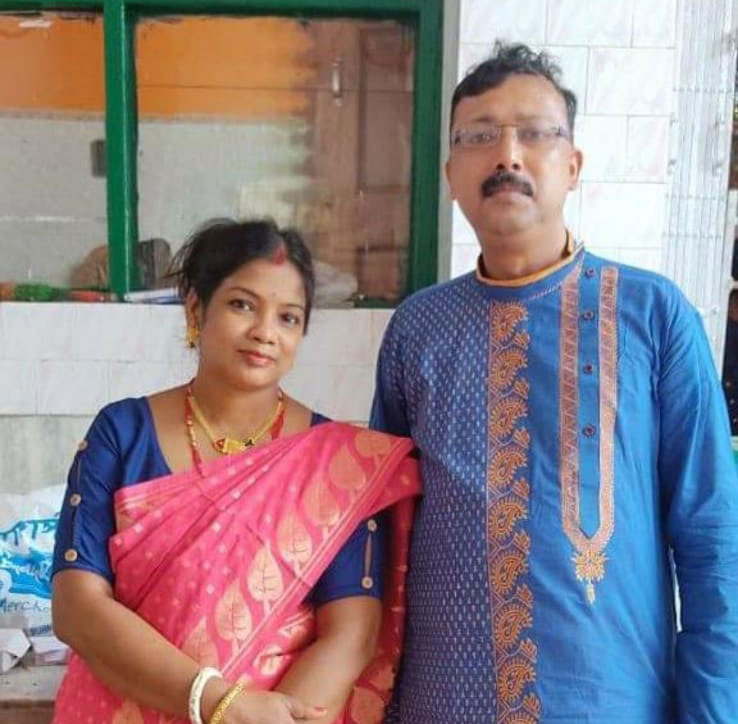
Sithanshu Mukherjee s/o Late Nirmalendra kumar Mukherjee
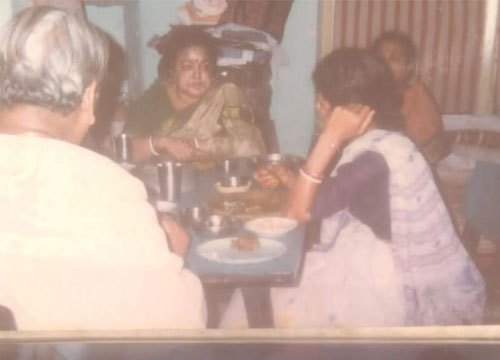
Baba and Ma being fed by our relatives in Shithi, Kolkata
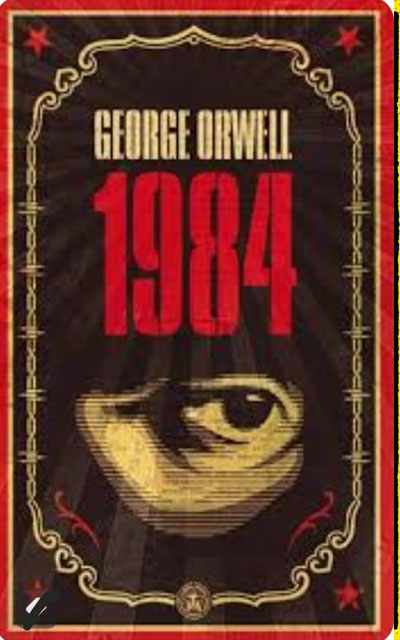
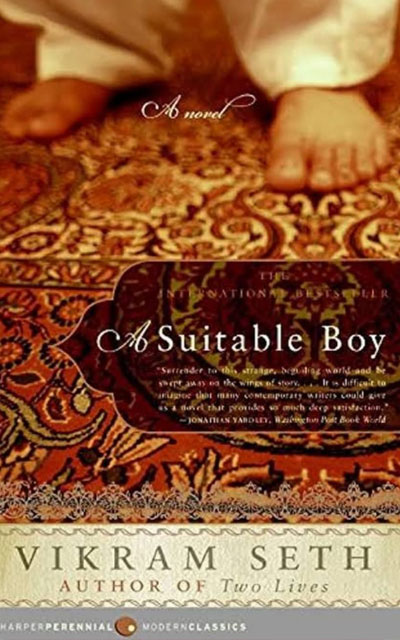
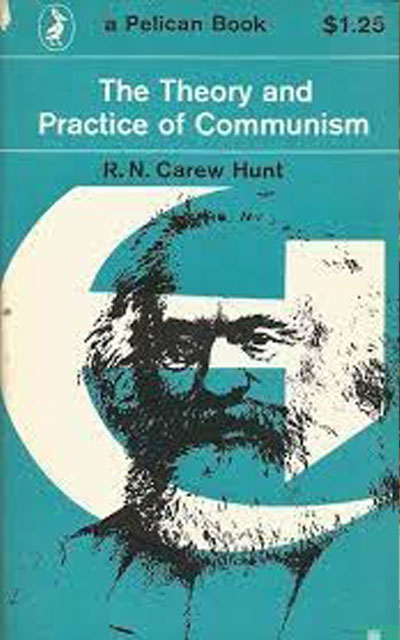
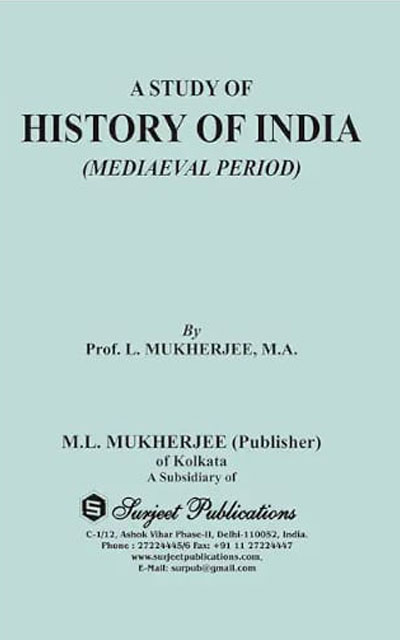
Books That Bound Me to My Father